
For L&D leaders · 2026

The Future Skills A-Z

78 words across Climate fluency, AI skills and Future mindset: why each one matters, and what you can do today.

70%

Of Gen Zs and millennials weigh an employer's environmental credentials when choosing where to work.

Deloitte Gen Z and Millennial Survey, 2025

52.7%

Higher hiring rate for green talent than for the workforce overall.

LinkedIn Global Green Skills Report, 2026

66%

Of leaders say they wouldn't hire someone without AI skills.

Microsoft and LinkedIn Work Trend Index, 2024

36%

Of Gen Zs say their employer isn't giving them enough AI upskilling.

Deloitte Gen Z and Millennial Survey, 2026

Our framework

Why Climate fluency, AI skills and Future mindset

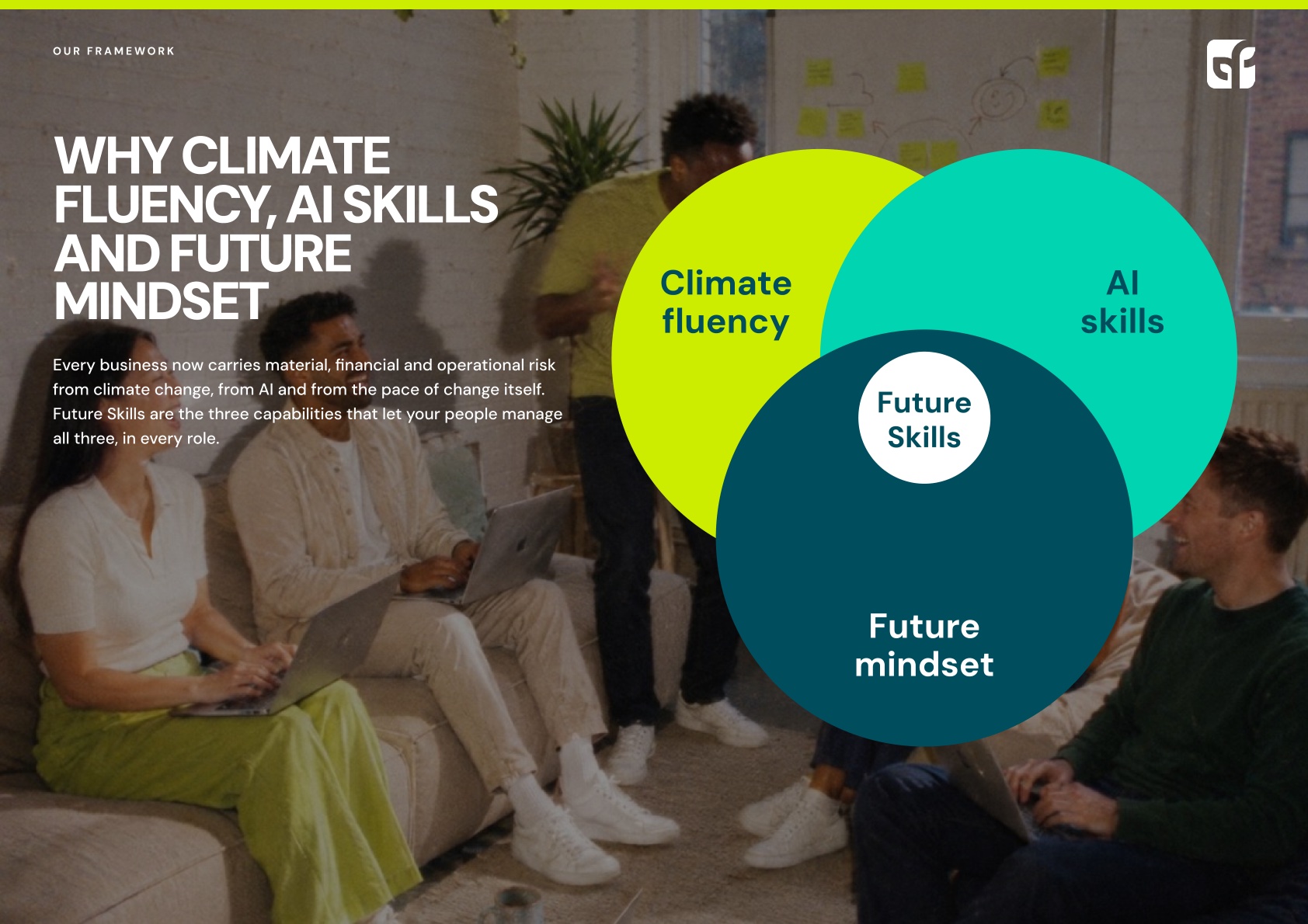
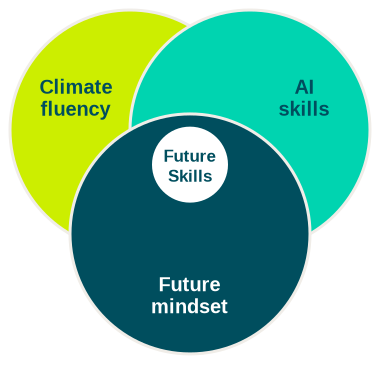
Every business now carries material, financial and operational risk from climate change, from AI and from the pace of change itself. Future Skills are the three capabilities that let your people manage all three, in every role.

Future Skills: Climate fluency, AI skills and Future mindset
Climate fluency

Reading climate risk, disclosure and decarbonisation well enough to act on it.

US$224bn

Lost to natural disasters worldwide in 2025, of which only around US$108bn was insured.

Munich Re, 2026

AI skills

Using AI safely and well, with the judgement to check its work.

No.1

AI and big data top the experts' risk ranking for the first time, ahead of climate change.

AXA Future Risks Report, 2026

Future mindset

The behaviours that make change stick: adaptability, resilience and systems thinking.

39%

Of workers' core skills are expected to change by 2030.

WEF Future of Jobs, 2025

The A to Z

78 words across three pillars.

Share on LinkedIn
A
Future Skills A-Z

A is for Adaptation, Agentic and Abundance.

Climate fluency

Adaptation

/ˌadapˈteɪʃ(ə)n/ · noun

The process of changing to suit new conditions, especially in response to environmental change.

Why it matters now: Some climate impacts are already locked in. Cutting emissions still matters, and so does getting ready for what's coming.

Try today: Pick one process, product or plan, check how exposed it is to climate, and name one change that would make it more resilient.

Source: Oxford Learner's Dictionary

AI skills

Agentic

/eɪˈdʒɛntɪk/ · adjective

Acting with agency; in AI, describing a system that can plan and take multi-step actions toward a goal with limited supervision.

Why it matters now: AI agents are moving out of pilots and into real work. When one acts on its own, someone still has to own the result.

Try today: Before you let an AI tool act for you, decide who checks its work and how.

Source: Cambridge Dictionary

Future mindset

Abundance

/əˈbʌndəns/ · noun

A very large quantity of something; here, a mindset that assumes there is enough opportunity, resource or reward to go around.

Why it matters now: Climate and AI are reshaping markets fast. The organisations that keep spotting new openings tend to do better.

Try today: Take one challenge on your plate this week and ask what opportunity might be hiding in it.

Source: Oxford Learner's Dictionaries

B
Future Skills A-Z

B is for Biodiversity, Bias and Belonging.

Climate fluency

Biodiversity

/ˌbʌɪə(ʊ)dʌɪˈvɜːsɪti/ · noun

The variety of plant and animal life in a particular habitat or the world as a whole.

Why it matters now: Investors now see nature loss as a real business risk. And the reporting rules are catching up.

Try today: Pick one supplier and ask where their materials actually come from. Does that land or water matter to anyone locally?

Source: Oxford Learner's Dictionary

AI skills

Bias

/ˈbʌɪəs/ · noun

An inclination or prejudice for or against a person or group; in AI, systematic errors in a model that produce unfair outcomes.

Why it matters now: One biased person makes a handful of unfair calls. A biased AI tool can make thousands before anyone notices, and regulators are starting to ask who's responsible.

Try today: Next time you use an AI tool at work, ask what it learned from, and who might be missing from that picture.

Source: Oxford Learner's Dictionaries, EU AI Act (Article 10 - Data and Data Governance)

Future mindset

Belonging

/bɪˈlɒŋɪŋ/ · noun

The feeling of being accepted as a member of a group.

Why it matters now: Change is unsettling, especially at this pace. People who feel they belong in their team cope with it much better.

Try today: Grab five minutes with a colleague and ask how the latest change is really landing for them.

Source: Oxford Learner's Dictionaries

C
Future Skills A-Z

C is for Circularity, Context and Curiosity.

Climate fluency

Circularity

/ˌsəːkjʊˈlarɪti/ · noun

An economic system built to eliminate waste through the continual reuse of resources.

Why it matters now: Make, use and throw away is getting expensive. Resources are tighter and the rules on waste keep getting stricter.

Try today: Pick one product or process and ask what happens to it at the end. Then find one way to make it last longer.

Source: Oxford Learner's Dictionary, Ellen MacArthur Foundation

AI skills

Context

/ˈkɒntɛkst/ · noun

The situation or information around something that helps explain it; in AI, the instructions, documents and examples you give a model so it can produce a useful answer.

Why it matters now: An AI tool only knows what you tell it. Brief it the way you'd brief a new colleague and the answers get much better.

Try today: Next time you ask an AI tool for something, add who it's for, what good looks like and one example. Then compare.

Source: Oxford Learner's Dictionaries, Anthropic, Claude documentation glossary

Future mindset

Curiosity

/ˌkjʊərɪˈɒsɪti/ · noun

A strong desire to know or learn something.

Why it matters now: The science and the tools are both moving fast. Staying curious is how you keep up.

Try today: Spend 15 minutes today on a climate or AI topic you know nothing about yet.

Source: Oxford Learner's Dictionaries

D
Future Skills A-Z

D is for Decarbonisation, Data and Discomfort.

Climate fluency

Decarbonisation

/diːˌkɑːbənʌɪˈzeɪʃ(ə)n/ · noun

The process of replacing fossil fuels with less harmful alternatives to cut carbon dioxide emissions.

Why it matters now: Every credible net zero plan depends on it, and regulators increasingly want to see real progress.

Try today: Find one thing in your own work with a clear carbon footprint. What would the lower-carbon version look like?

Source: Oxford Learner's Dictionary

AI skills

Data

/ˈdeɪtə/ · noun

Facts and statistics collected for reference or analysis.

Why it matters now: Every AI or sustainability claim is only as good as the data behind it. Weak data is the most common reason claims fall apart under scrutiny.

Try today: Take one number you rely on and trace it back. Where did it come from, and how was it collected?

Source: Oxford Learner's Dictionaries

Future mindset

Discomfort

/dɪsˈkʌmfət/ · noun

Slight pain or physical unease; also, unease at a difficult or unfamiliar situation.

Why it matters now: Climate and AI both force decisions before all the facts are in. Being able to sit with that uncertainty is what lets people move.

Try today: Make one decision this week with the information you have now.

Source: Oxford Learner's Dictionaries

E
Future Skills A-Z

E is for Emissions, Ethics and Empathy.

Climate fluency

Emissions

/ɪˈmɪʃ(ə)nz/ · noun

Substances, especially gases, discharged into the air.

Why it matters now: Emissions are how regulators, investors and customers check whether a climate claim stands up.

Try today: Find out whether your organisation reports Scope 1, 2 or 3 emissions. Which one is nobody talking about yet?

Source: Oxford Learner's Dictionary

AI skills

Ethics

/ˈɛθɪks/ · noun

Moral principles that govern behaviour, including in the design and use of technology.

Why it matters now: Responsible AI is now a governance requirement, with real consequences when it goes wrong.

Try today: Before you roll out a new AI tool, ask: who could this hurt, and how would we find out?

Source: Oxford Learner's Dictionaries

Future mindset

Empathy

/ˈɛmpəθi/ · noun

The ability to understand and share the feelings of another.

Why it matters now: Climate impacts and AI change land unevenly. Empathy keeps the people hit hardest in the room.

Try today: Before you sign off a decision, ask who it affects that you haven't spoken to yet.

Source: Oxford Learner's Dictionaries

F
Future Skills A-Z

F is for Flooding, Fluency and Failure.

Climate fluency

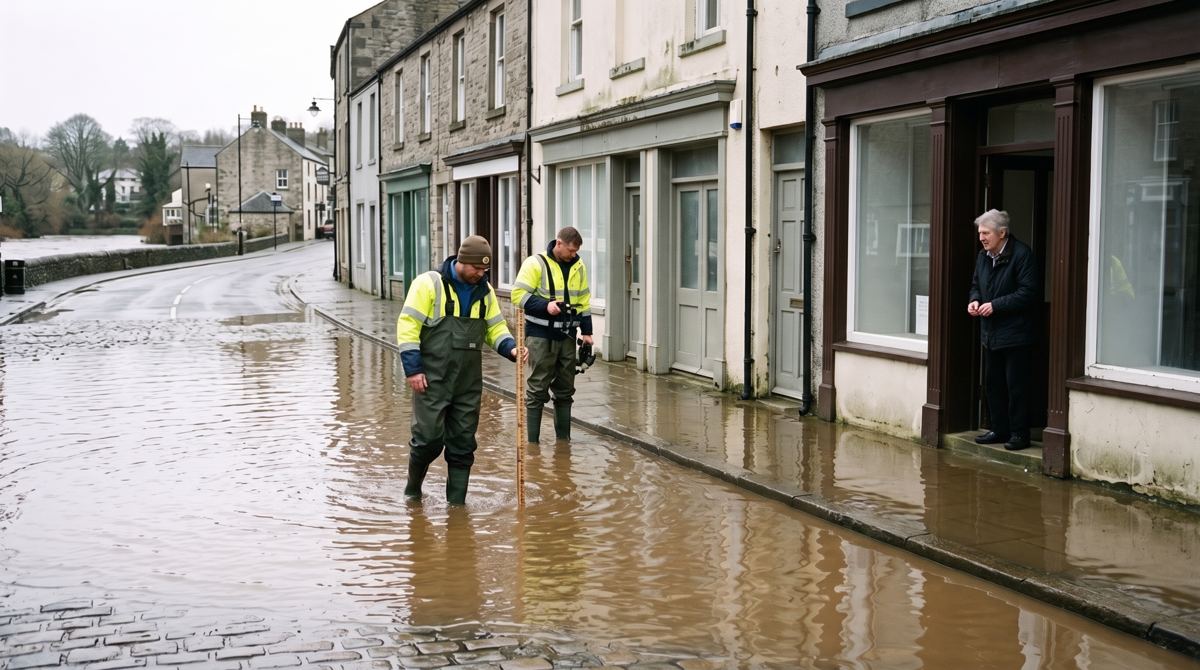
Flooding

/ˈflʌdɪŋ/ · noun

An overflow of water that submerges land which is usually dry.

Why it matters now: Flood risk is already changing insurance bills, property values and where businesses can safely set up.

Try today: Check the flood risk for one site your organisation depends on, whether that's an office, a warehouse or a supplier.

Source: Oxford Learner's Dictionary

AI skills

Fluency

/ˈfluːənsi/ · noun

The ability to use a skill, especially language, accurately, easily and confidently; here, comfort and competence in working with AI.

Why it matters now: Basic AI fluency is heading the way digital skills went a decade ago: everyone will need it. The gap between fluent and non-fluent teams is growing fast.

Try today: Use an AI tool on a real task this week, and jot down what you'd do differently next time.

Source: Oxford Learner's Dictionaries

Future mindset

Failure

/ˈfeɪljə/ · noun

A lack of success; an unsuccessful attempt.

Why it matters now: As the climate changes and AI adoption grows, there's a lot of trial and error ahead. Treating failure as data keeps people trying.

Try today: Write down one thing that didn't work this month and what it taught you.

Source: Oxford Learner's Dictionaries

G
Future Skills A-Z

G is for Greenwashing, Generative and Growth.

Climate fluency

Greenwashing

/ˈɡriːnwɒʃɪŋ/ · noun

Disinformation put out by an organisation to present an environmentally responsible public image.

Why it matters now: UK and EU regulators can now fine companies for green claims they can't back up.

Try today: Before you repeat a sustainability claim, ask what's behind it. Could you show the evidence to a regulator?

Source: Cambridge Dictionary

AI skills

Generative

/ˈdʒɛnərətɪv/ · adjective

Able to produce or create new content; describing AI models that generate text, images or other original outputs.

Why it matters now: Generative AI is now built into tools most people use every day, often without them noticing.

Try today: Think of one piece of work you made with AI help this week. Did you say so where it mattered?

Source: Oxford Learner's Dictionaries

Future mindset

Growth

/ɡrəʊθ/ · noun

The process of increasing in size, number, value or strength; here, a mindset that treats ability as something that develops through effort.

Why it matters now: Skills keep developing long after someone's hired. A growth mindset is what makes ongoing upskilling stick.

Try today: Name one skill you've always assumed you're bad at, and take one small step in it today.

Source: Oxford Learner's Dictionaries

H
Future Skills A-Z

H is for Heatwave, Hallucination and Humility.

Climate fluency

Heatwave

/ˈhiːtweɪv/ · noun

A prolonged period of abnormally hot weather.

Why it matters now: Heat is now the deadliest extreme weather hazard. It hits people's health, productivity and buildings.

Try today: Does your organisation have a heat plan for staff, sites or suppliers? If not, find out who should own it.

Source: Oxford Learner's Dictionary, WMO

AI skills

Hallucination

/həˌluːsɪˈneɪʃ(ə)n/ · noun

A false perception of something not present; in AI, a confident but factually wrong output generated by a model.

Why it matters now: A made-up AI answer sounds just as confident as a correct one. Spotting it matters as much as writing a good prompt.

Try today: Fact-check one AI answer you'd normally just accept.

Source: Oxford Learner's Dictionaries, Cambridge Dictionary (2023 Word of the Year)

Future mindset

Humility

/hjuːˈmɪlɪti/ · noun

A modest view of one's own importance; here, a willingness to accept limits to one's own knowledge.

Why it matters now: Climate science and AI are moving faster than any one person can follow. Saying what you don't know keeps decisions honest.

Try today: Say "I don't know yet" out loud once this week.

Source: Oxford Learner's Dictionaries

I
Future Skills A-Z

I is for ISSB, Inference and Imagination.

Climate fluency

ISSB

/ˌaɪ ɛs ɛs ˈbiː/ · acronym

International Sustainability Standards Board: the body that sets IFRS S1 and IFRS S2, the global baseline for sustainability and climate disclosure.

Why it matters now: More than 40 jurisdictions are using or moving towards ISSB standards, and the UK's own reporting standards are built on them.

Try today: Find out whether your organisation, or your biggest client, reports against ISSB or UK SRS. Who puts it together?

Source: IFRS Foundation

AI skills

Inference

/ˈɪnf(ə)r(ə)ns/ · noun

A conclusion reached from evidence and reasoning; in AI, the process of a trained model producing an output from new input.

Why it matters now: Most of AI's day-to-day cost, in energy and money, now comes from inference: running a trained model on new questions, not training it in the first place.

Try today: Next time an AI answer misses, improve your prompt once before you re-run it. Each re-run costs something.

Source: Oxford Learner's Dictionaries, Google Machine Learning Glossary

Future mindset

Imagination

/ɪˌmadʒɪˈneɪʃ(ə)n/ · noun

The ability to form new ideas or concepts not present to the senses.

Why it matters now: Big problems like climate change, and using AI well, both need people who can picture systems that don't exist yet.

Try today: Sketch what your role looks like in 5 years if the change you're most worried about actually happens.

Source: Oxford Learner's Dictionaries

J
Future Skills A-Z

J is for Just Transition, Jailbreak and Judgment.

Climate fluency

Just Transition

/dʒʌst trænˈzɪʃ(ə)n/ · phrase

An approach to economic transition, particularly to a low-carbon economy, that aims to protect the livelihoods of the workers and communities affected by it.

Why it matters now: Climate policy that leaves workers and communities behind loses public support, and without support the change won't last.

Try today: When you propose a sustainability change, name who could lose out and what would make it fair for them.

Source: International Labour Organization (ILO)

AI skills

Jailbreak

/ˈdʒeɪlbreɪk/ · noun/verb

An escape from prison; in AI, a technique used to bypass a model's built-in safety limits.

Why it matters now: Jailbreaks show that AI safety limits can be broken. That's why a person always needs to stay in the loop.

Try today: Ask a vendor what happens when someone deliberately tries to break their AI tool's safety limits.

Source: Oxford Learner's Dictionaries, NIST CSRC Glossary (AI security sense)

Future mindset

Judgment

/ˈdʒʌdʒm(ə)nt/ · noun

The ability to make considered decisions or reach sensible conclusions.

Why it matters now: AI now writes more of the first draft. Your judgment is in deciding what to keep, change or throw out.

Try today: Before you accept an AI answer, name the one thing you'd check before signing it off.

Source: Oxford Learner's Dictionaries

K
Future Skills A-Z

K is for Keystone species, Knowledge base and Kaizen.

Climate fluency

Keystone species

/ˈkiːstəʊn ˈspiːʃiːz/ · phrase

A species other species in an ecosystem depend on so heavily that removing it would change the ecosystem drastically.

Why it matters now: Protecting the few species that others depend on often does more good than trying to protect everything at once.

Try today: Learn the name of one keystone species near your sites or in your supply chain.

Source: Cambridge Dictionary

AI skills

Knowledge base

/ˈnɒlɪdʒ beɪs/ · phrase

A collection of information about a particular subject; in AI, the trusted documents a model is connected to so its answers draw on your own material.

Why it matters now: Connecting AI to a well-kept knowledge base is one of the best ways to get accurate answers about your own organisation.

Try today: Find one out-of-date document your team still relies on, and update it or archive it.

Source: Cambridge Dictionary

Future mindset

Kaizen

/ˈkʌɪzɛn/ · noun

A Japanese way of running an organisation by always trying to improve the way people work, in small, continuous steps.

Why it matters now: Climate and AI skills build up through lots of small changes. Teams that get a little better every week keep pace.

Try today: Pick one small thing about how your team works that annoys everyone, and fix it this week.

Source: Cambridge Dictionary

L
Future Skills A-Z

L is for Lifecycle assessment, LLM and Listening.

Climate fluency

Lifecycle assessment

/ˈlʌɪfsʌɪk(ə)l əˈsɛsm(ə)nt/ · phrase

A method for measuring the environmental impact of a product or service across its whole life, from raw materials to disposal.

Why it matters now: Product claims and Scope 3 figures increasingly depend on lifecycle data, and customers and regulators are asking to see it.

Try today: Pick something you buy often and ask the supplier if a lifecycle assessment exists for it.

Source: ISO 14040

AI skills

LLM

/ˌɛl ɛl ˈɛm/ · acronym

Large language model: an AI system trained on large amounts of text to predict, generate or understand human language.

Why it matters now: An LLM predicts likely words. Knowing that changes how much you should trust what it tells you.

Try today: Next time an LLM gives you a confident answer, ask what it would look like if it were wrong.

Source: Oxford Learner's Dictionaries

Future mindset

Listening

/ˈlɪs(ə)nɪŋ/ · noun

Giving attention to sound; paying close attention to what someone says.

Why it matters now: The people closest to climate impacts, or to AI changing their job, often spot the risk before leadership does. Someone just has to ask them.

Try today: In one meeting this week, ask a question and let the answer finish before you jump in.

Source: Cambridge Dictionary

M
Future Skills A-Z

M is for Materiality, Multimodal and Momentum.

Climate fluency

Materiality

/məˌtɪərɪˈæləti/ · noun

The quality of being important or relevant; in sustainability reporting, how much a climate or social issue matters to a company's finances and, under the EU's double materiality, to people and the planet.

Why it matters now: ISSB, UK SRS and CSRD all start with what's material. Knowing which climate issues matter most decides what gets measured, funded and reported.

Try today: Ask for your organisation's latest materiality assessment and find where your team's work shows up.

Source: IFRS S1, Revised ESRS, Delegated Regulation (EU) 2026/1563

AI skills

Multimodal

/ˌmʌltiˈməʊd(ə)l/ · adjective

Involving more than one mode or channel; in AI, describing a model that can process and combine inputs such as text, image and audio.

Why it matters now: AI can now work with text, images and audio together, the way people do. That makes it more useful, and it brings new kinds of mistakes.

Try today: Give an AI tool an image or document along with your question, and see how the answer changes.

Source: NIST CSRC Glossary

Future mindset

Momentum

/məˈmɛntəm/ · noun

The strength or force a process gains as it develops.

Why it matters now: Climate action and AI adoption both stall without early wins people can see. Keeping momentum going is a leadership job.

Try today: Name one small win from the last month and make sure the whole team hears about it.

Source: Oxford Learner's Dictionaries

N
Future Skills A-Z

N is for Nature, No-code and Networks.

Climate fluency

Nature

/ˈneɪtʃə/ · noun

The physical world, including plants, animals, land, water and the ecosystems they form; in business, the natural resources and services every economy depends on, from clean water to pollination.

Why it matters now: More than half of global GDP depends on nature. The ISSB is now building nature reporting on the TNFD framework, so nature loss is moving into mainstream business reporting.

Try today: Name one natural resource your organisation relies on, like water, timber or crops. Who keeps an eye on the risk to it?

Source: Oxford Learner's Dictionaries, WEF, Nature Risk Rising (2020), IFRS, ISSB welcomes TNFD support

AI skills

No-code

/ˌnəʊ ˈkəʊd/ · adjective

Describing tools that let people build apps, automations or AI workflows without writing code.

Why it matters now: With no-code AI tools, people outside IT can build their own automations. So the rules and skills need to reach every team.

Try today: Pick one manual process in your team and check whether an approved no-code tool could take part of it off your hands.

Source: TechTarget

Future mindset

Networks

/ˈnɛtwɜːks/ · noun

Groups of people who exchange information, ideas and support, often across organisations and sectors.

Why it matters now: Climate and AI practice moves faster than any course. Peers a step ahead are often the quickest way to find out what works.

Try today: Introduce two people in your network who are working on the same problem.

Source: Oxford Learner's Dictionaries

O
Future Skills A-Z

O is for Offsetting, Output and Openness.

Climate fluency

Offsetting

/ˈɒfsɛtɪŋ/ · noun

Compensating for emissions by funding an equivalent carbon saving elsewhere.

Why it matters now: Offset quality is under serious scrutiny. Buying credits without cutting emissions first is now a reputational risk.

Try today: If your organisation uses offsets, check that cutting emissions came first, and what standard verifies the credits.

Source: Cambridge Dictionary

AI skills

Output

/ˈaʊtpʊt/ · noun

The amount of something produced; in AI, the result a model generates in response to an input.

Why it matters now: An AI output is only as good as the judgement applied to it afterwards, and that part is still yours.

Try today: Before you use an AI output, ask what would change if it turned out to be wrong.

Source: Oxford Learner's Dictionaries

Future mindset

Openness

/ˈəʊpənnəs/ · noun

The quality of being able to think about, accept or listen to different ideas or people.

Why it matters now: There's no fixed playbook for the climate transition or AI. Being open to changing your approach is a practical skill.

Try today: Ask someone who disagrees with your approach what they'd do differently, and properly think it through.

Source: Oxford Learner's Dictionaries

P
Future Skills A-Z

P is for Physical risk, Provenance and Purpose.

Climate fluency

Physical risk

/ˈfɪzɪk(ə)l rɪsk/ · phrase

The risk of loss or disruption from the physical effects of climate change, such as floods, heat, storms and drought.

Why it matters now: Natural disasters caused about US$224bn of losses in 2025. Physical risk reaches every organisation through its sites, people and suppliers.

Try today: Pick one site or supplier you depend on and check which climate hazard it's most exposed to.

Source: IFRS S2, Munich Re, 2026

AI skills

Provenance

/ˈprɒvɪnəns/ · noun

The place of origin or earliest known history of something; in AI, the traceable origin of data, content or a model's outputs.

Why it matters now: Fake content is getting harder to spot. Knowing where something came from is becoming the main way to judge whether you can trust it.

Try today: Check whether one piece of content, data or image you're using can be traced back to its source.

Source: Oxford Learner's Dictionaries, C2PA (Coalition for Content Provenance and Authenticity)

Future mindset

Purpose

/ˈpɜːpəs/ · noun

The reason for which something is done or exists.

Why it matters now: Purpose is what keeps people going through the slow, unglamorous bits of the climate and AI transitions.

Try today: Write one sentence linking today's most tedious task to the outcome you really care about.

Source: Oxford Learner's Dictionaries

Q
Future Skills A-Z

Q is for Air Quality, Query and Questioning.

Climate fluency

Air Quality

/ɛː ˈkwɒlɪti/ · phrase

The degree to which air is free from pollutants harmful to health or the environment.

Why it matters now: Air pollution is one of the leading causes of preventable death, and you usually can't see it until it's measured.

Try today: Look up the air quality where you spend most of your time, and check what's driving the number.

Source: World Health Organization (WHO)

AI skills

Query

/ˈkwɪəri/ · noun

A question, especially one asking for information or expressing a doubt; in computing and AI, a request for information from a database or system.

Why it matters now: How you ask shapes what you get back, from AI and from people. Asking well is a skill in its own right.

Try today: Rewrite one question you send an AI tool this week to be more specific, then compare the two answers.

Source: Oxford Learner's Dictionaries

Future mindset

Questioning

/ˈkwɛstʃ(ə)nɪŋ/ · noun/adjective

The act of asking questions; having a tendency to question things.

Why it matters now: AI makes plausible-sounding answers cheap. Asking where something came from matters more than ever.

Try today: Pick one fact or figure you've taken at face value lately, and check its source.

Source: Oxford Learner's Dictionaries

R
Future Skills A-Z

R is for Resilience, Reasoning and Reframe.

Climate fluency

Resilience

/rɪˈzɪlɪəns/ · noun

The capacity to recover quickly from difficulties, or to withstand and adapt to shocks.

Why it matters now: Climate and economic shocks are coming more often. Organisations that plan for disruption bounce back faster.

Try today: Ask one team what its plan is for the disruption it's least ready for.

Source: Oxford Learner's Dictionary

AI skills

Reasoning

/ˈriːz(ə)nɪŋ/ · noun

Thinking about something in a logical, sensible way; in AI, a model's ability to work through steps toward a conclusion rather than pattern-match an answer.

Why it matters now: Reasoning models can show their working. That makes mistakes easier to catch before anyone acts on them, though you still have to look.

Try today: Ask an AI tool to explain its reasoning before you accept its answer, then check the reasoning holds up.

Source: Oxford Learner's Dictionaries

Future mindset

Reframe

/riːˈfreɪm/ · verb

To put an idea or situation into a different context; to look at it differently.

Why it matters now: Climate change and AI can feel huge and abstract. Turning them into one specific, local decision makes them much easier to act on.

Try today: Take one big worry about climate or AI and rewrite it as a decision you can make this week.

Source: Cambridge Dictionary

S
Future Skills A-Z

S is for Scope, Safety and Self-awareness.

Climate fluency

Scope

/skəʊp/ · noun

The extent of what something covers; in emissions accounting, the classification of direct and indirect emissions as Scope 1, 2 and 3.

Why it matters now: Most of an organisation's climate impact sits in Scope 3, the emissions it doesn't directly control, and that's where most reporting still falls short.

Try today: Ask whether Scope 3 is included in any climate figure you're shown. If it isn't, ask why.

Source: Oxford Learner's Dictionary, GHG Protocol

AI skills

Safety

/ˈseɪfti/ · noun

The state of being protected from harm; in AI, the practices that stop AI systems causing harm, from testing and guardrails to human oversight.

Why it matters now: AI tools are doing more on their own. You need to know how a tool was tested, what it won't do and who's accountable when it gets something wrong.

Try today: Ask whoever approved your main AI tool what safety testing it went through, and where that's written down.

Source: Oxford Learner's Dictionaries, NIST AI Risk Management Framework

Future mindset

Self-awareness

/sɛlf əˈweənəs/ · noun

Conscious knowledge of one's own character, feelings, motives and desires.

Why it matters now: Knowing your own blind spots is where using AI responsibly starts, and it makes you more credible when you lead people through change.

Try today: Name one assumption you're bringing into a decision today, and check it's still true.

Source: Oxford Learner's Dictionaries

T
Future Skills A-Z

T is for Tipping Point, Tokens and Trust.

Climate fluency

Tipping Point

/ˈtɪpɪŋ pɔɪnt/ · phrase

The point at which a series of small changes becomes significant enough to cause a larger, often irreversible, change.

Why it matters now: Several climate systems are close to thresholds that won't reverse in our lifetimes. That makes the urgency immediate.

Try today: Learn the name of one climate tipping point that matters to a region your organisation works in.

Source: Oxford Learner's Dictionary, IPCC AR6

AI skills

Tokens

/ˈtəʊkənz/ · noun

The small units of text, such as words or parts of words, that an AI model reads and writes; models are priced and limited by the number of tokens they process.

Why it matters now: Tokens decide how much an AI tool can read at once and what it costs. That adds up fast once a whole organisation is using it.

Try today: Find out how your AI tools are billed, per seat or per token, and who's keeping track of the spend.

Source: Anthropic, Claude documentation glossary

Future mindset

Trust

/trʌst/ · noun

Firm belief in the reliability, truth or ability of someone or something.

Why it matters now: Trust in institutions, data and AI is in short supply, and once it's lost it takes a long time to rebuild.

Try today: Do one thing today that makes your work easier for someone else to check.

Source: Oxford Learner's Dictionaries

U
Future Skills A-Z

U is for Urban heat, Use case and Unlearning.

Climate fluency

Urban heat

/ˈɜːbən hiːt/ · phrase

The extra heat that builds up in towns and cities, where buildings, roads and traffic absorb and release more heat than the surrounding countryside.

Why it matters now: Offices, sites and transport in cities run hotter in a heatwave, and that hits staff health, cooling bills and productivity.

Try today: Find out how hot your main workplace gets on the warmest days, and whether there's a plan for staff.

Source: US EPA, Heat Island Effect

AI skills

Use case

/ˈjuːs keɪs/ · phrase

A description of the way someone could use a particular product or system; in AI, a defined task where AI saves time or improves the quality of work.

Why it matters now: Organisations get value from AI one use case at a time. The teams that name theirs clearly are the ones that get past pilots.

Try today: Write down one task you repeat every week as a use case: what goes in, what comes out and who checks it.

Source: Cambridge Dictionary

Future mindset

Unlearning

/ʌnˈlɜːnɪŋ/ · noun/verb

Discarding a previously held belief or way of doing something, especially one that's no longer useful.

Why it matters now: Some of our most confident assumptions about work, energy and technology are going out of date the fastest.

Try today: Name one belief about how your industry works that you haven't questioned in years. Does it still hold?

Source: Oxford Learner's Dictionaries

V
Future Skills A-Z

V is for Verification, Vulnerability and Vision.

Climate fluency

Verification

/ˌvɛrɪfɪˈkeɪʃ(ə)n/ · noun

The process of establishing the truth, accuracy or validity of something, typically through independent assessment.

Why it matters now: Climate claims face more scrutiny and regulation than ever. Independent verification is what makes a claim credible.

Try today: Ask whether a sustainability figure you're using has been independently checked, and by whom.

Source: Oxford Learner's Dictionary

AI skills

Vulnerability

/ˌvʌlnərəˈbɪlɪti/ · noun

The state of being exposed to possible harm; in AI security, a weakness that can be exploited to make a system behave unintentionally.

Why it matters now: As AI gets built into more critical processes, its weak spots become your organisation's weak spots.

Try today: Ask one AI vendor how they find and fix vulnerabilities in their tool.

Source: Cambridge Dictionary, EU AI Act Article 15 (Accuracy, robustness and cybersecurity), EU AI Act Service Desk

Future mindset

Vision

/ˈvɪʒ(ə)n/ · noun

The ability to think about or plan the future with imagination or wisdom; a mental picture of what the future could be.

Why it matters now: Climate strategy and AI adoption both need a clear picture of where you're heading, so every decision pulls the same way.

Try today: Write one sentence describing what success looks like for your organisation on this in 3 years.

Source: Oxford Learner's Dictionaries

W
Future Skills A-Z

W is for Waste, Workflow and Wellbeing.

Climate fluency

Waste

/weɪst/ · noun

Unwanted or unusable material, substances or by-products.

Why it matters now: Waste is one of the few climate issues almost any organisation can act on right now, without waiting for new policy or technology.

Try today: Track one kind of waste in your own work for a week, then cut the easiest bit.

Source: Oxford Learner's Dictionary

AI skills

Workflow

/ˈwɜːkfləʊ/ · noun

The series of stages a piece of work passes through from start to finish; in AI, a set of steps an AI system carries out, with points where a person reviews the work.

Why it matters now: AI agents can now run several steps of a workflow in a row. The useful skill is deciding where a person checks the work and signs it off.

Try today: Write out one workflow you own as a list of steps, and mark the ones that need a human decision.

Source: Oxford Learner's Dictionaries

Future mindset

Wellbeing

/wɛlˈbiːɪŋ/ · noun

The state of being comfortable, healthy or happy.

Why it matters now: Climate anxiety and worry about AI and jobs are real, measurable stress. Ignoring them wears down the people you need to get through the change.

Try today: Ask one team member how the pace of change is really affecting them.

Source: Oxford Learner's Dictionaries

X
Future Skills A-Z

X is for eXposure, eXplainability and eXchange.

Climate fluency

eXposure

/ɪkˈspəʊʒə/ · noun

The state of being open to harm; in climate risk, the presence of people, assets or supply chains in places that climate hazards could affect.

Why it matters now: Exposure decides how hard a climate event hits you. Knowing where your sites, people and suppliers are is the starting point for any climate risk plan.

Try today: List your three most important sites or suppliers and look up their flood and heat risk.

Source: IPCC AR6 WGII, Annex II Glossary

AI skills

eXplainability

/ɪkˌspleɪnəˈbɪlɪti/ · noun

The extent to which the internal workings of an AI system can be explained in human terms.

Why it matters now: Regulators and courts are starting to ask organisations to explain automated decisions. That's hard if the system can't explain itself.

Try today: Could a decision-making tool you use explain its reasoning, in plain language, to someone it affects?

Source: NIST AI Risk Management Framework (AI RMF 1.0), Section 3.5

Future mindset

eXchange

/ɪksˈtʃeɪndʒ/ · noun/verb

Giving one thing and receiving another in return; the reciprocal sharing of ideas or information.

Why it matters now: In a field moving this fast, talking to people a step ahead of you is the quickest way to close a skills gap.

Try today: Have one real conversation this week with someone outside your usual network who knows something you don't.

Source: Oxford Learner's Dictionaries

Y
Future Skills A-Z

Y is for Yield, Your data and Youth.

Climate fluency

Yield

/jiːld/ · noun

The amount produced, especially of an agricultural crop.

Why it matters now: Climate volatility is already cutting yields of key crops, and that feeds straight through to food security and prices.

Try today: Pick one food or material your organisation relies on and check how exposed its yield is to climate swings.

Source: Oxford Learner's Dictionary

AI skills

Your data

/jɔː ˈdeɪtə/ · phrase

The information you or your organisation own, including what you type, upload or connect to an AI tool.

Why it matters now: Depending on the tool's terms, what you paste into AI can be stored, used to improve the model or exposed in a breach. Data rules belong in AI upskilling.

Try today: Check whether the AI tool you use most can use your inputs to improve its models, and how to switch that off.

Source: ICO, Artificial intelligence and data protection

Future mindset

Youth

/juːθ/ · noun

The period between childhood and adulthood; young people considered as a group.

Why it matters now: Young people are inheriting the climate transition and an AI-shaped job market they didn't design. Their view changes what practical solutions look like.

Try today: Ask someone under 25 what worries or excites them most about AI or climate right now, and really listen to the answer.

Source: Oxford Learner's Dictionaries

Z
Future Skills A-Z

Z is for Zero-carbon, Zero-shot and Zoom-out.

Climate fluency

Zero-carbon

/ˈzɪərəʊ ˈkɑːbən/ · adjective

Not associated with, and not producing, any carbon dioxide emissions.

Why it matters now: In its strict sense it's a higher bar than net zero: no emissions at source, with no offsets. That makes it a good test of how genuine a claim is.

Try today: Next time you see a zero-carbon claim, ask whether it relies on offsets or is emissions-free at source.

Source: Cambridge Dictionary
AI skills

Zero-shot

/ˈzɪərəʊ ʃɒt/ · adjective

Describing an AI model's ability to attempt a task it was never specifically trained on or given examples for.

Why it matters now: Zero-shot is why general AI tools feel so flexible. It also means the model is guessing in territory nobody checked.

Try today: When an AI tool takes on a task you never briefed it on, treat the first answer as a draft that needs checking.

Source: Google Machine Learning Glossary

Future mindset

Zoom-out

/zuːm aʊt/ · phrase

Taking a broader, more distanced perspective on a situation, seeing the wider system around the immediate detail.

Why it matters now: Climate and AI decisions made only at the local level can cause bigger problems across the wider system. Stepping back is a practical safeguard.

Try today: Before you finalise one decision this week, ask how it looks from outside your team, organisation or sector.

Source: IDEO U

Share it

Know someone who needs this?

Share the A-Z with your network. The post links back to this page, so they can get their own copy.

Share on LinkedIn
The Future Skills A-Z coverWhy Climate fluency, AI skills and Future mindset: the framework page